Fall Home Maintenance Checklist
Fall is the highest-leverage maintenance season. What you do in October determines what breaks in January.
Fact-checked and reviewed by a licensed home inspector (ASHI #A-4471) by Ray Whitfield. Read our content review process.

Fall maintenance is preventive in the most literal sense: nearly every winter emergency — a failed furnace, a frozen pipe, an ice dam — has a fall task that would have prevented it.
Heating system
- Schedule a professional furnace or boiler service in September or October
- Replace the filter and buy several spares
- Test the system before the first cold night; burn off the initial dust smell with windows open
- Vacuum and clear all supply and return registers
- Bleed hot water radiators if you have them
- Confirm the carbon monoxide alarm on every level is working before combustion appliances run
Chimney and fireplace
- Have the chimney inspected and swept if you burn wood
- Confirm the damper opens, closes, and seals
- Check the chimney cap and crown for damage
- Inspect the firebox for cracked mortar joints
Seal the envelope
- Replace worn weatherstripping on exterior doors; you should not see daylight at the edges
- Add or replace door sweeps
- Caulk exterior gaps around window and door trim, and at siding penetrations
- Seal attic bypasses — around plumbing stacks, wiring, and recessed lights — before adding insulation
- Insulate accessible ductwork in unconditioned space
- Consider a blower door test; many utilities subsidize energy audits
Water and freeze protection
- Shut off and drain exterior hose bibs; disconnect and store hoses
- Blow out irrigation systems before the first hard freeze
- Insulate pipes in crawl spaces, garages, and exterior walls
- Locate and label the main water shutoff so anyone in the house can find it
- Drain and store rain barrels
- Test the sump pump and add a battery backup if your basement depends on it
Roof, gutters, and drainage
- Clean gutters after the leaves finish falling — a second cleaning is usually required
- Confirm downspouts still discharge well away from the foundation
- Inspect roof and flashing before winter
- Check attic insulation depth and ventilation; both prevent ice dams
- Trim branches that could break under snow or ice load
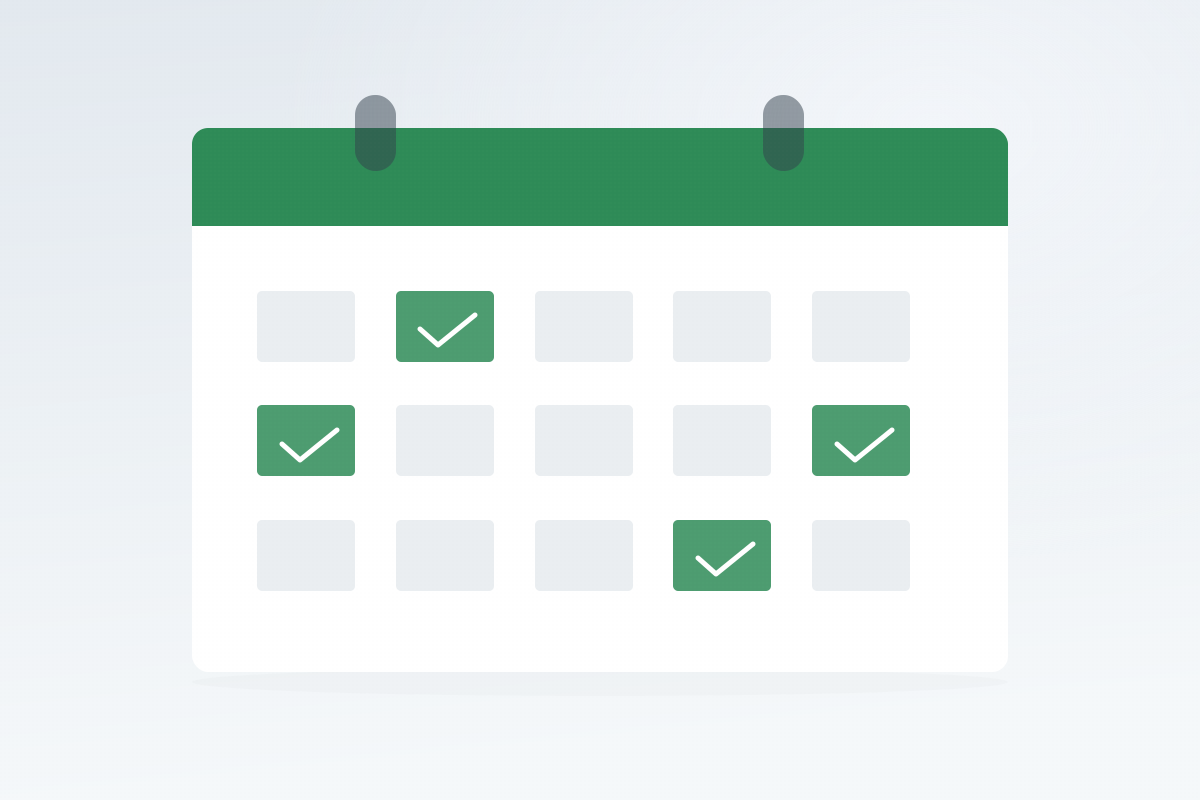
| Do it by | Task |
|---|---|
| Early September | Book furnace service before the rush |
| Late September | Chimney inspection and sweep |
| Early October | Weatherstripping, caulking, attic air sealing |
| Mid October | Irrigation blowout in cold climates |
| Before first freeze | Exterior hose bibs, pipe insulation |
| After leaf drop | Final gutter cleaning |
Frequently asked questions
When should I schedule furnace maintenance?
September or October. Waiting until the first cold snap means longer waits and, if a part is needed, days without heat.
How do I prevent ice dams?
Ice dams are an attic heat problem, not a gutter problem. Air seal attic bypasses, add insulation, and confirm soffit-to-ridge ventilation is unobstructed.
At what temperature do pipes freeze?
Pipes in unconditioned spaces are at risk when outdoor temperatures fall below about 20°F for a sustained period, sooner in wind-exposed areas.
Editorial note. This article is general guidance, not a substitute for a professional inspection. If you suspect a gas leak, electrical fault, structural damage, or any condition that may be unsafe, leave the area if necessary and contact a licensed professional or your utility immediately.